
Firecrawl

Some links on this page are affiliate links. We earn a commission if you sign up – at no additional cost to you. Our editorial assessment is independent and never paid. How we review.
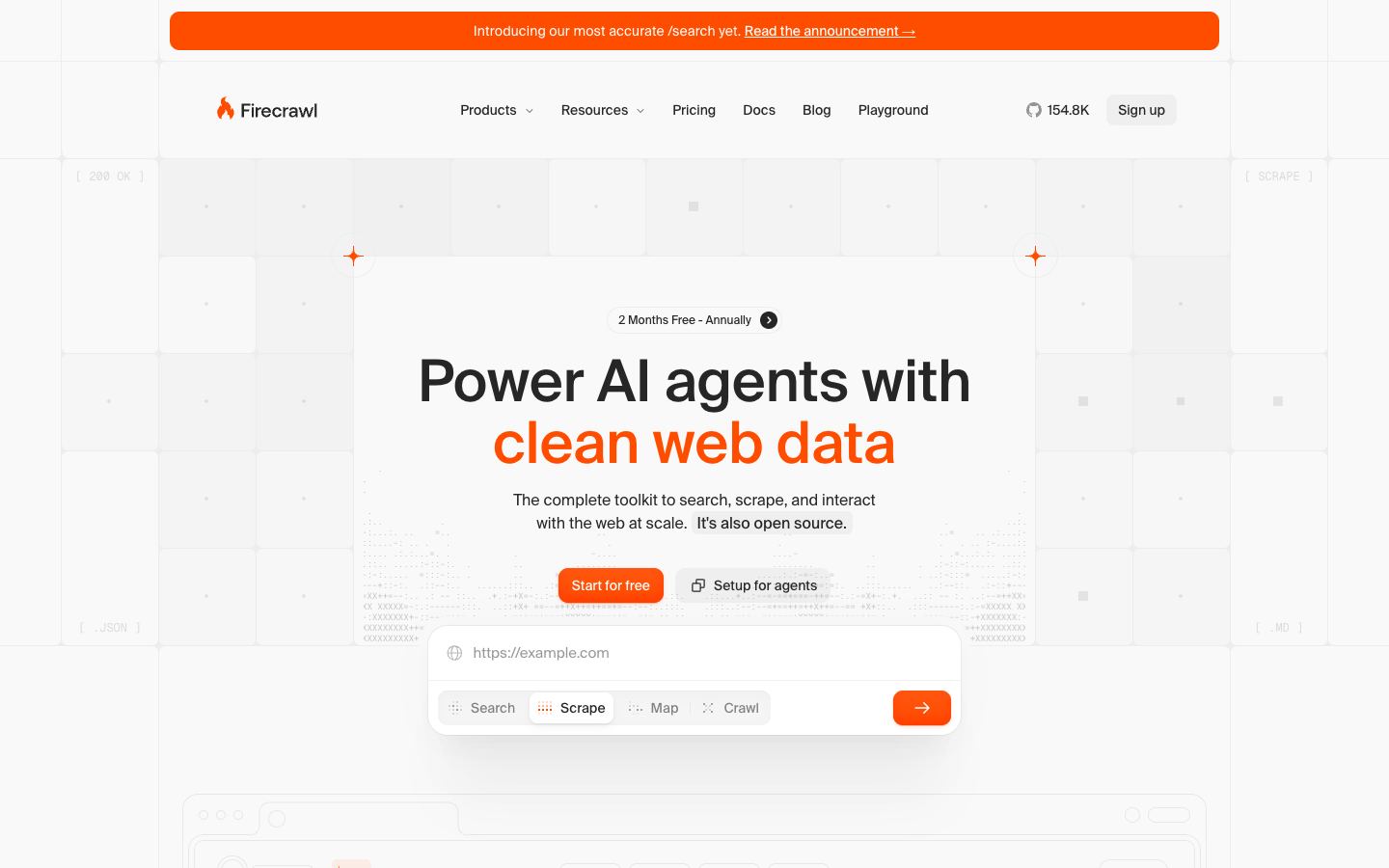
What is Firecrawl?
Our verdict
Web scraping APIs abstract away the hardest parts of web data collection: JavaScript rendering, anti-bot detection, proxy rotation, and data parsing. Instead of building and maintaining your own scraping infrastructure, you send a URL and receive clean, structured data back. For AI applications, many of these APIs now return LLM-ready markdown or structured JSON.
Tags:#freemium#open-source#self-hosted#js-rendering#structured-output#markdown-output#anti-bot-bypass#crawling#headless-browser#api-first#mcp#llm-ready
Similar tools



How Firecrawl compares
Comparisons
Frequently asked questions
How much does Firecrawl cost?
What's the difference between Firecrawl and Crawl4AI?
Can Firecrawl handle JavaScript-heavy sites?
Is Firecrawl open source?
Latest news
Visit
Firecrawl