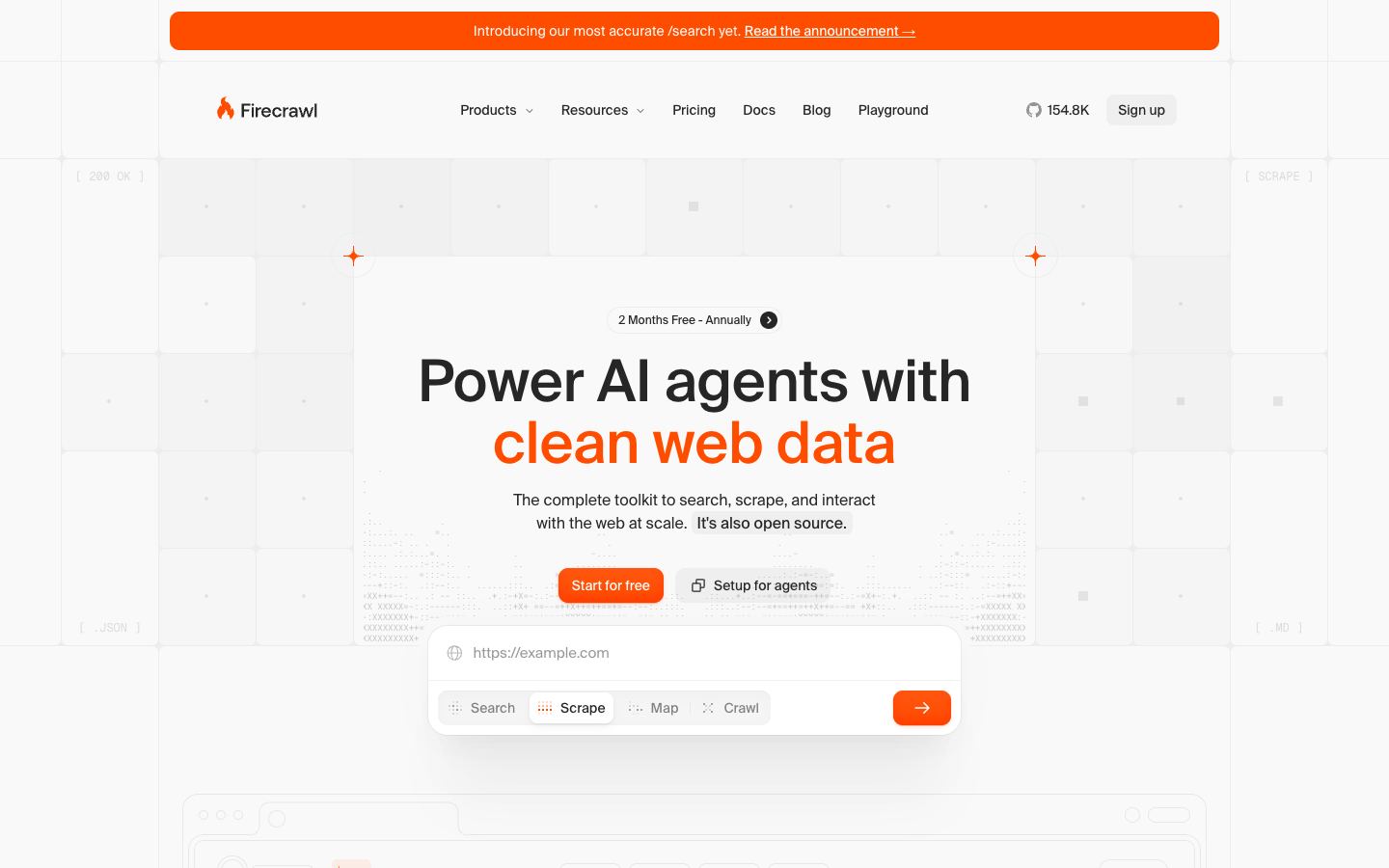
Firecrawl is the AI-native default. A single API call returns LLM-ready Markdown plus optional structured fields with JS rendering and anti-bot handled for you, so there are no proxy types or JS toggles to configure. Pricing is per page rather than per GB, which maps directly to an AI workload counted in documents, and there is a free tier to validate on before committing budget.
Decodo (formerly Smartproxy) Alternatives

Some links on this page are affiliate links. We earn a commission if you sign up – at no additional cost to you. Our editorial assessment is independent and never paid. How we review.
Decodo rebranded from Smartproxy in April 2025 and now markets itself as an AI-ready proxy and scraping platform, but the foundation and pricing stay proxy-bandwidth-first. Its flagship residential product bills per GB, which is hard to map to an AI workload measured in pages or documents. Teams land here when the AI layer (AI Parser, MCP server, n8n node, Markdown output) turns out to be bolted onto proxy infrastructure rather than a purpose-built extraction API, and they want a single clean call that returns LLM-ready data.
- The flagship residential product bills per GB, which is hard to map to an AI workload counted in pages or tokens. A single JS-heavy site can silently burn the monthly GB allotment, and the predictable per-request scraping API is a separate, request-capped product.
- Decodo is a proxy company first, scraping API second. The AI-native layer (AI Parser, MCP server, n8n node, Markdown output) was added around the April 2025 rebrand and sits on top of proxy infrastructure, so the surface area is heavier than a purpose-built extraction tool: you still pick proxy types, JS toggles, and templates.
- The tier design penalizes the workload AI teams actually run. Each Web Scraping API plan splits across standard vs premium proxies and with/without JavaScript, and the 'premium + JS' bucket needed for defended, JS-rendered targets is the smallest allowance (e.g. 82K requests on the $99 Business plan vs 707K standard), so real costs land well above the headline price.
- There are documented pricing-consistency gaps. The residential pay-as-you-go rate shows as $4/GB on the pricing grid but $8.50/GB via the Wallet FAQ and third-party reviews, and the highest-volume per-GB tiers appear in 'from $2/GB' marketing copy that does not always match the live grid. Teams that want one clear per-page number before committing budget find this hard to plan around.
Each alternative below is in the serp.fast directory with its own independent review. Decodo (formerly Smartproxy) is not – we don't list traditional proxy-first vendors. The prose summarizes the trade against Decodo (formerly Smartproxy) specifically.
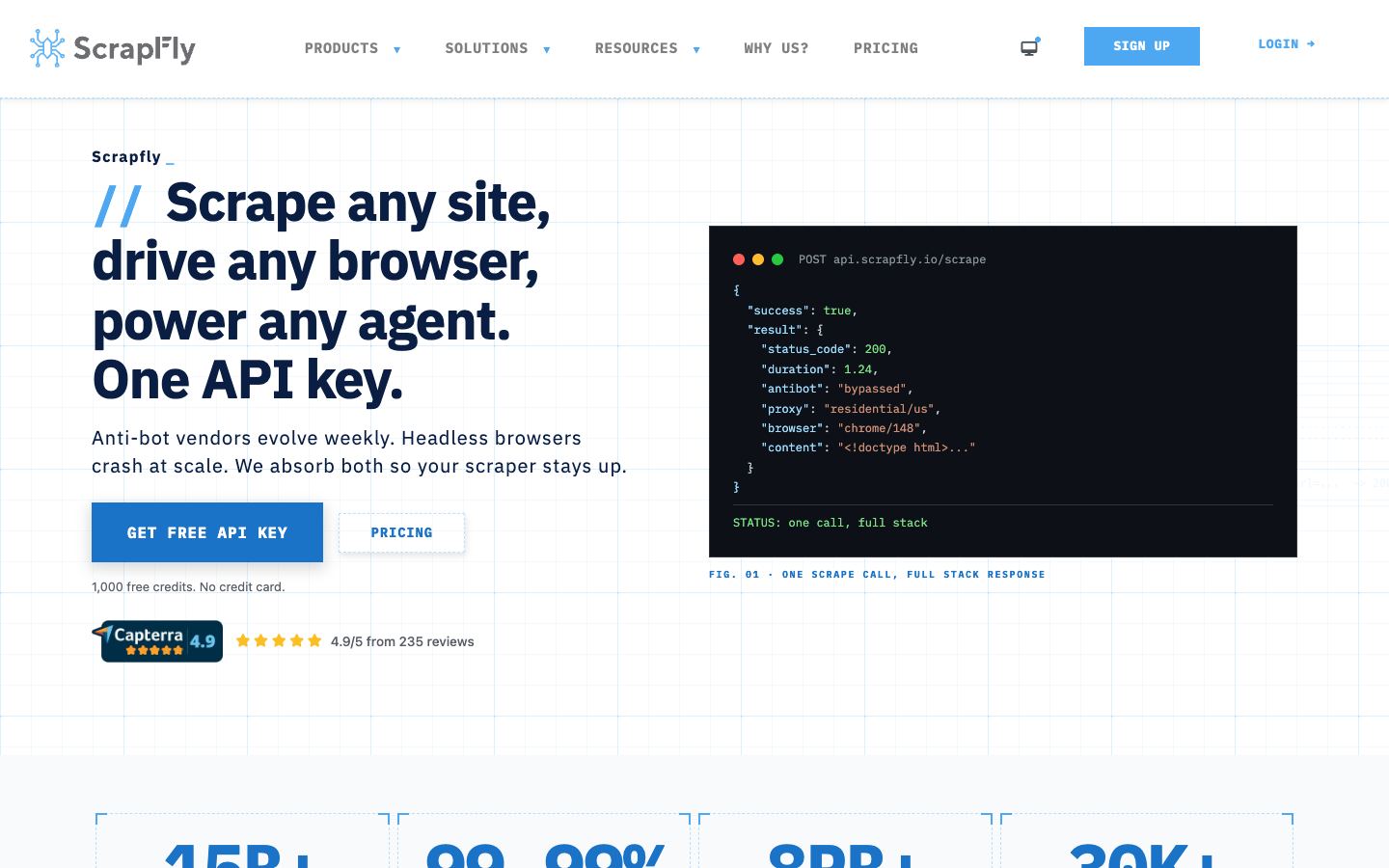
Scrapfly is the closest like-for-like on hard targets without Decodo's bandwidth billing. Its Anti-Scraping Protection bypass covers the defended, JS-rendered sites that Decodo gates behind its smallest 'premium + JS' allowance, and billing is per request rather than per GB. A good fit when anti-bot capability is the requirement but you do not want proxy plumbing in your code.
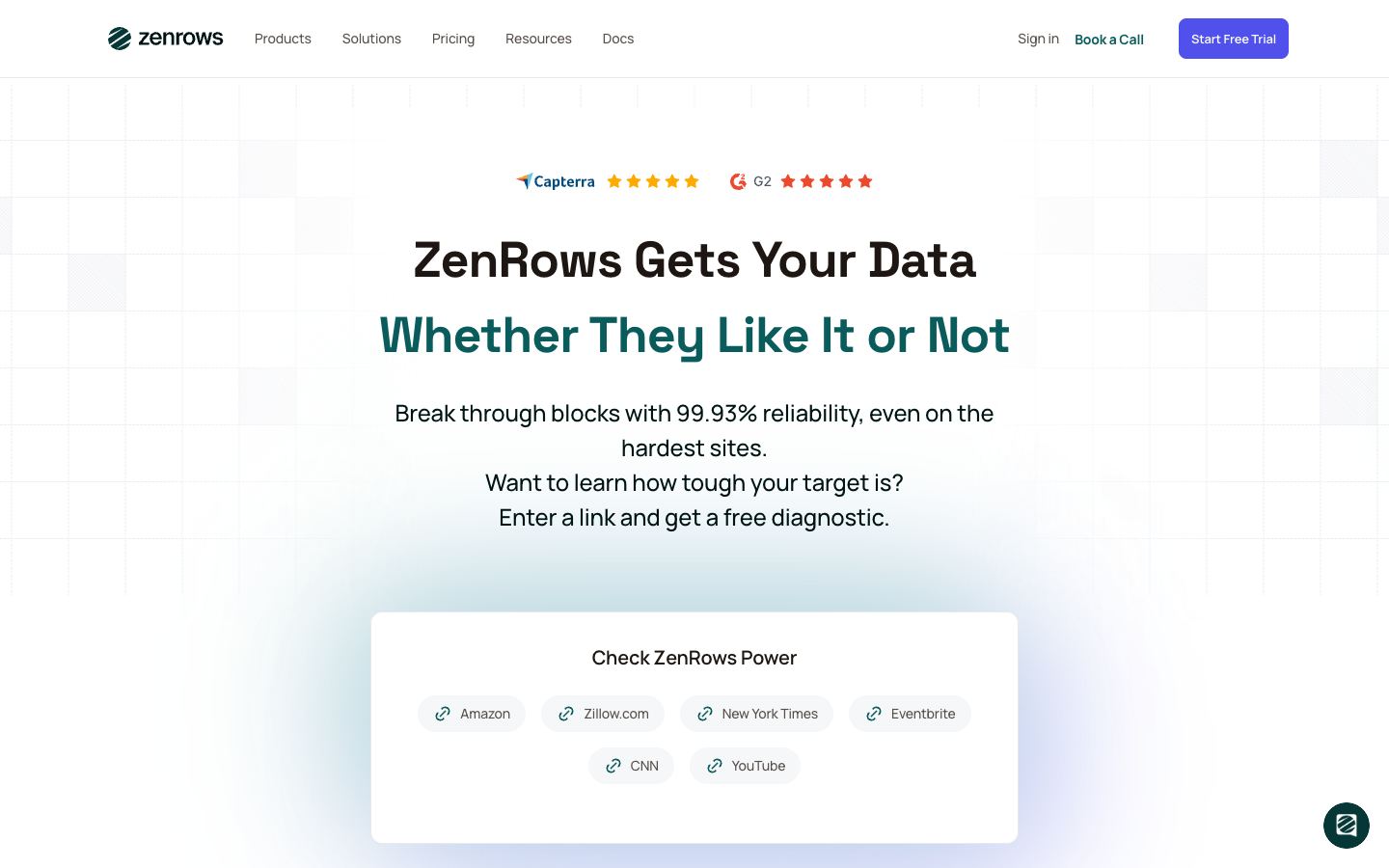
ZenRows is the budget-tier swap. It resolves Cloudflare and DataDome on the same request and prices per request, with no per-GB conversion to reverse-engineer. Pick it when Decodo's residential GB model is the blocker and your volume sits in the mid-tens of thousands of pages per month.
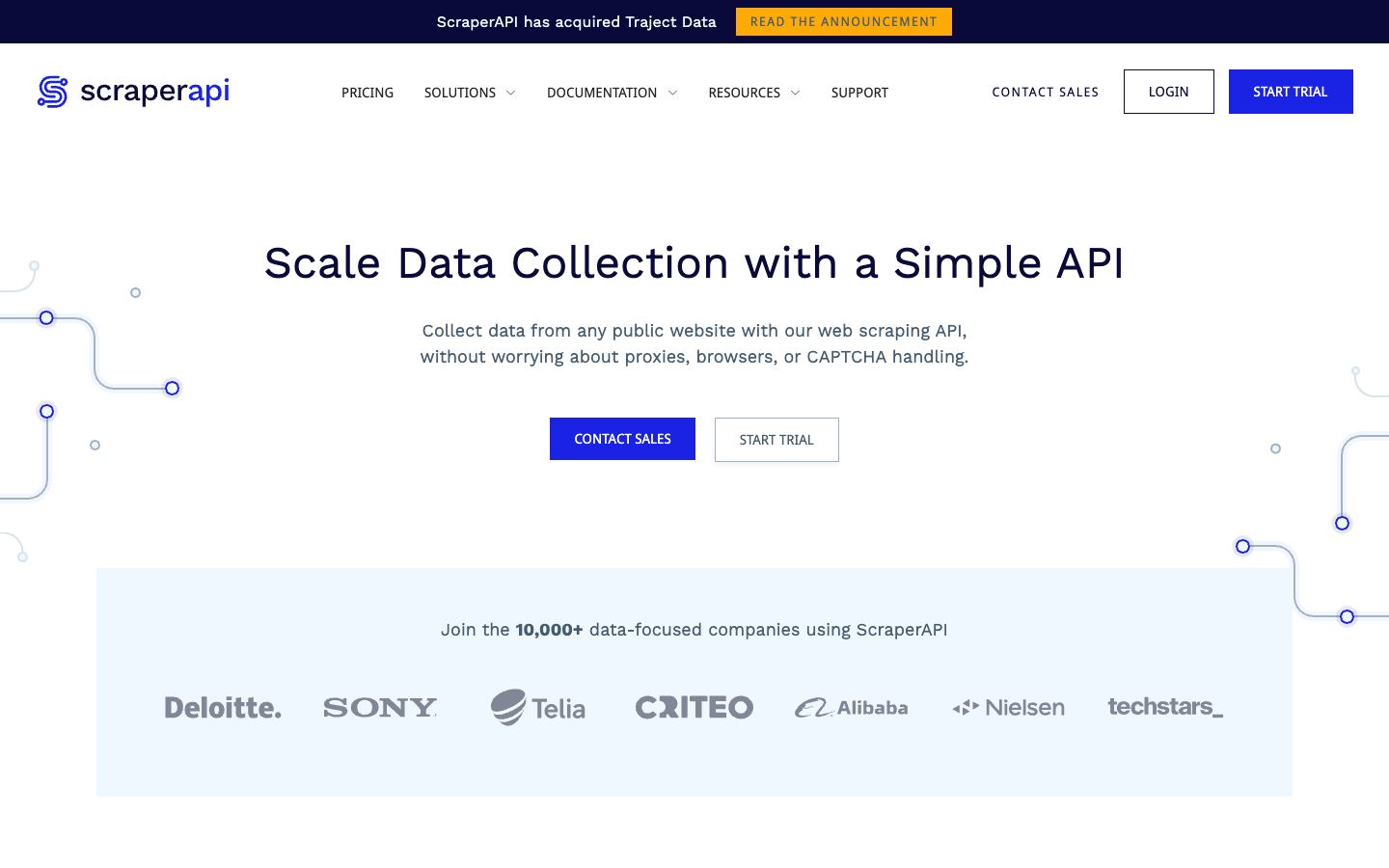
ScraperAPI is the established mid-market option, with broad site coverage, automatic proxy rotation, and a DataPipeline product for scheduled bulk extractions. It overlaps Decodo's general-purpose scraping API while keeping a single predictable request-based price, so there is no flagship product on a separate bandwidth meter.
Apify trades a generic scraping endpoint for a marketplace of pre-built Actors that emit structured data, plus a hosted scheduler Decodo's API layer lacks. It fits when your needs concentrate on a known set of high-value sites with stable schemas, and you would rather rent finished scrapers than assemble proxies, templates, and parsers.
Zyte is the enterprise-tier substitute from the maintainers of Scrapy, pairing a managed proxy layer with AI-aware extraction APIs. Different positioning from Decodo's proxy-first stack, but a comparable reliability story for teams that want managed extraction rather than bandwidth-metered residential IPs.
Crawl4AI is the open-source path. You self-host the scraper, output Markdown for LLM ingestion, and pay infrastructure only, with no per-GB or per-request meter. It fits if Decodo's proxy product is the part you actually want and you would rather attach a proxy provider separately than buy it bundled with the API.
How Decodo (formerly Smartproxy) compares
The dimensions below summarise where Decodo (formerly Smartproxy) sits versus the 7 alternatives on each axis that typically drives a switch decision.
- 6 of 7 alternatives are cheaper than Decodo (formerly Smartproxy); the rest match or exceed its pricing.
- 2 of 7 alternatives are open source. The rest are commercial like Decodo (formerly Smartproxy).
- 6 of 7 alternatives have a free or freemium tier; the others gate evaluation behind paid access.
- Decodo (formerly Smartproxy) renders JavaScript and so do all alternatives. Anti-bot posture is the differentiator, not rendering.
- Decodo (formerly Smartproxy) and every alternative emit structured output. The differences are schema flexibility and post-processing cost.
- Decodo (formerly Smartproxy) is hosted-only; 2 alternatives offer self-hosting. Worth a look if your stack already runs on-prem or in a private VPC.
Other web crawl & data extraction apis alternatives
Decodo (formerly Smartproxy) is one of 13 web crawl & data extraction apis with a dedicated alternatives breakdown. If you're still narrowing the shortlist, the comparisons below cover the same category from a different anchor tool.
Frequently asked questions
What is the cheapest alternative to Decodo (formerly Smartproxy)?
Crawl4AI is free if you self-host, with only infrastructure cost. Among commercial options, ZenRows and ScraperAPI sit at the lowest per-request tier, and Firecrawl is the cheapest AI-native choice with a free tier you can validate on without a sales call. Unlike Decodo's flagship per-GB residential product, all of these price per request or per page, which is easier to budget for an AI workload.
Which Decodo alternative is best for AI agents and RAG pipelines?
Firecrawl. It returns LLM-ready Markdown from a single call and drops into the LangChain and LlamaIndex ecosystems, so you avoid choosing proxy types and JS toggles the way Decodo's stack requires. Crawl4AI is the open-source equivalent if you prefer to self-host.
Does Decodo's per-GB pricing matter for AI scraping?
It can. Decodo's flagship residential proxies bill per GB, so a JS-heavy page with bloated assets consumes far more allotment than its text content suggests, and a single heavy site can burn the monthly GB budget. Decodo does offer a per-request Web Scraping API, but it is a separate product and caps the 'premium + JS' requests most defended sites need. Per-page vendors like Firecrawl or per-request APIs like ScraperAPI are easier to forecast for page-counted workloads.
Do any of these handle anti-bot targets the way Decodo's Site Unblocker does?
Scrapfly's Anti-Scraping Protection, ZenRows on Cloudflare and DataDome, and Firecrawl's bypass layer all clear most defended public pages without a separate unblocker endpoint or proxy configuration. Decodo's Site Unblocker (per-request billing around $1.20 per 1,000 requests, dropping toward $0.95 at the highest volumes) is a capable proxy-style bypass, but the AI-native APIs fold that capability into one call. Test on your actual target list before committing.
Weekly briefing – tool launches, legal shifts, market data.