Is ScrapeGraphAI open source?
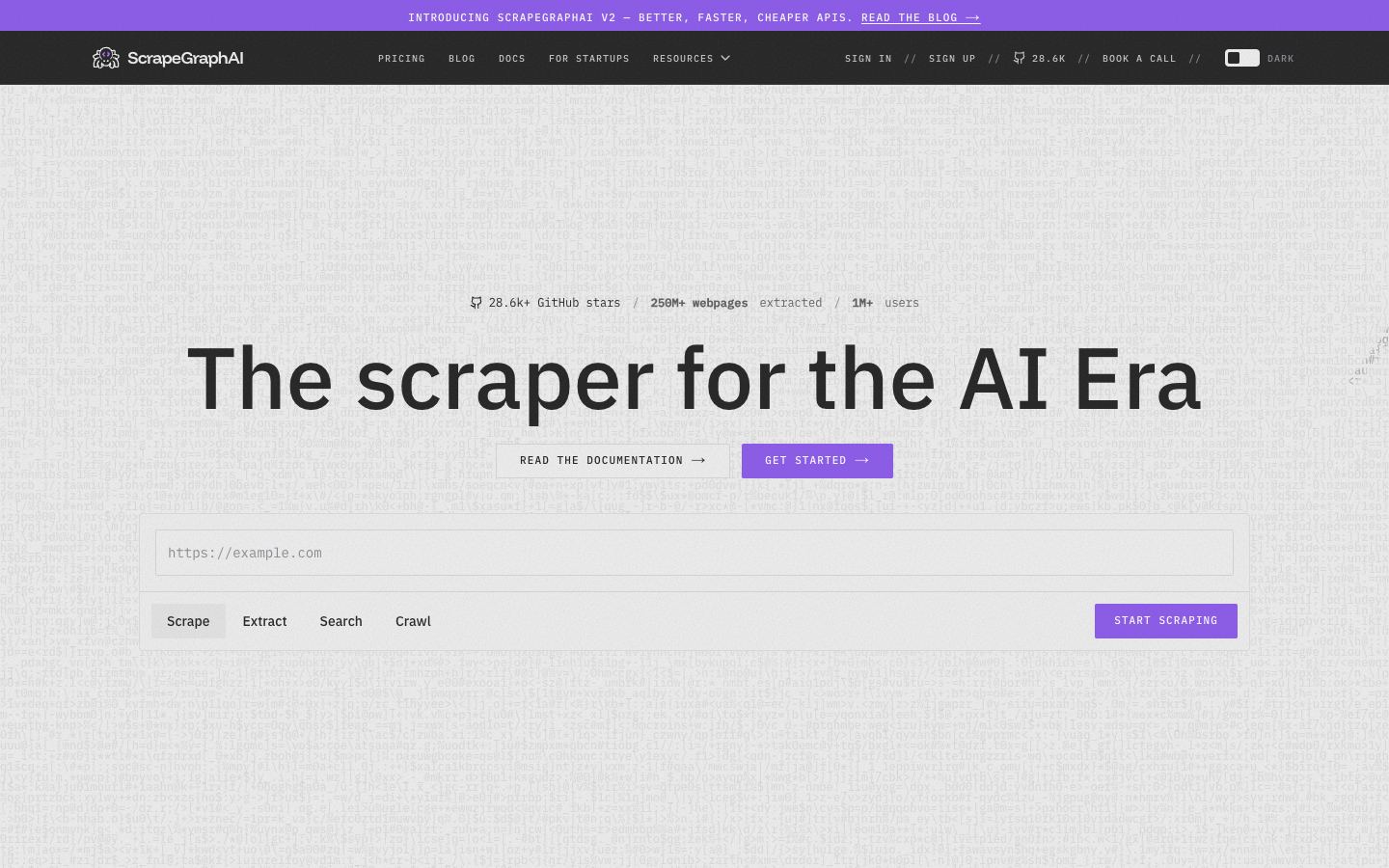
Yes. ScrapeGraphAI is an open-source Python library that uses LLMs to pull structured data from web pages based on natural-language prompts. The core library lives on GitHub, where it has gathered more than 28,000 stars. Alongside the open-source library, the company runs a hosted API service with its own pricing. You can install and run the library yourself or call the managed endpoints instead.
How much does ScrapeGraphAI cost?
The open-source library is free to install and run, though you pay separately for whatever LLM provider it calls. The hosted API uses a credit-based freemium model: a free plan includes a one-time allotment of credits, and paid tiers scale up through higher-volume plans plus a custom enterprise option. Different operations consume different amounts of credits, so check the current pricing page before you commit to a tier.
Can ScrapeGraphAI be self-hosted?
Yes. Because the core is an open-source Python library, you can run it on your own infrastructure and point it at whatever LLM you choose, including local or self-hosted models. That keeps page content and extraction inside your environment. The trade-off is that you manage the runtime, dependencies, and model costs yourself, instead of relying on the hosted API that handles scaling, proxies, and rate limits for you.
Does ScrapeGraphAI render JavaScript?
Yes. ScrapeGraphAI can load JavaScript-heavy pages and extract content after the page renders, rather than only parsing the initial HTML. You describe the data you want in plain English and it returns structured JSON. Output consistency depends on the quality of the underlying LLM and your prompt. For production use against dynamic sites, validate the results and build in retries instead of assuming every extraction is clean.
What is the best alternative to ScrapeGraphAI?
It depends on the job. Firecrawl is the closest alternative for turning sites into clean, LLM-ready markdown and JSON through a hosted API with less prompt tuning. Crawl4AI is a strong open-source option if you want crawling plus extraction without per-request fees. Diffbot suits teams that need large-scale, structured entity extraction with its own knowledge graph rather than prompt-driven scraping. Pick based on scale and whether you prefer self-hosting.
When should I choose ScrapeGraphAI over Firecrawl?
Choose ScrapeGraphAI when you want prompt-driven extraction in Python and value running an open-source library you can self-host and wire to your own LLM. Firecrawl leans toward a managed service that converts whole pages and sites into clean markdown or JSON with less setup. ScrapeGraphAI fits prototyping and targeted extraction tasks. For high-volume production crawling with predictable output, weigh Firecrawl's hosted approach and per-request pricing against your LLM costs.