Patches Chromium to run automation that bot detectors miss
Each tool is evaluated against our methodology using public docs, vendor demos, and hands-on testing.
Some links on this page are affiliate links. We earn a commission if you sign up – at no additional cost to you. Our editorial assessment is independent and never paid. How we review.
What is Rebrowser?
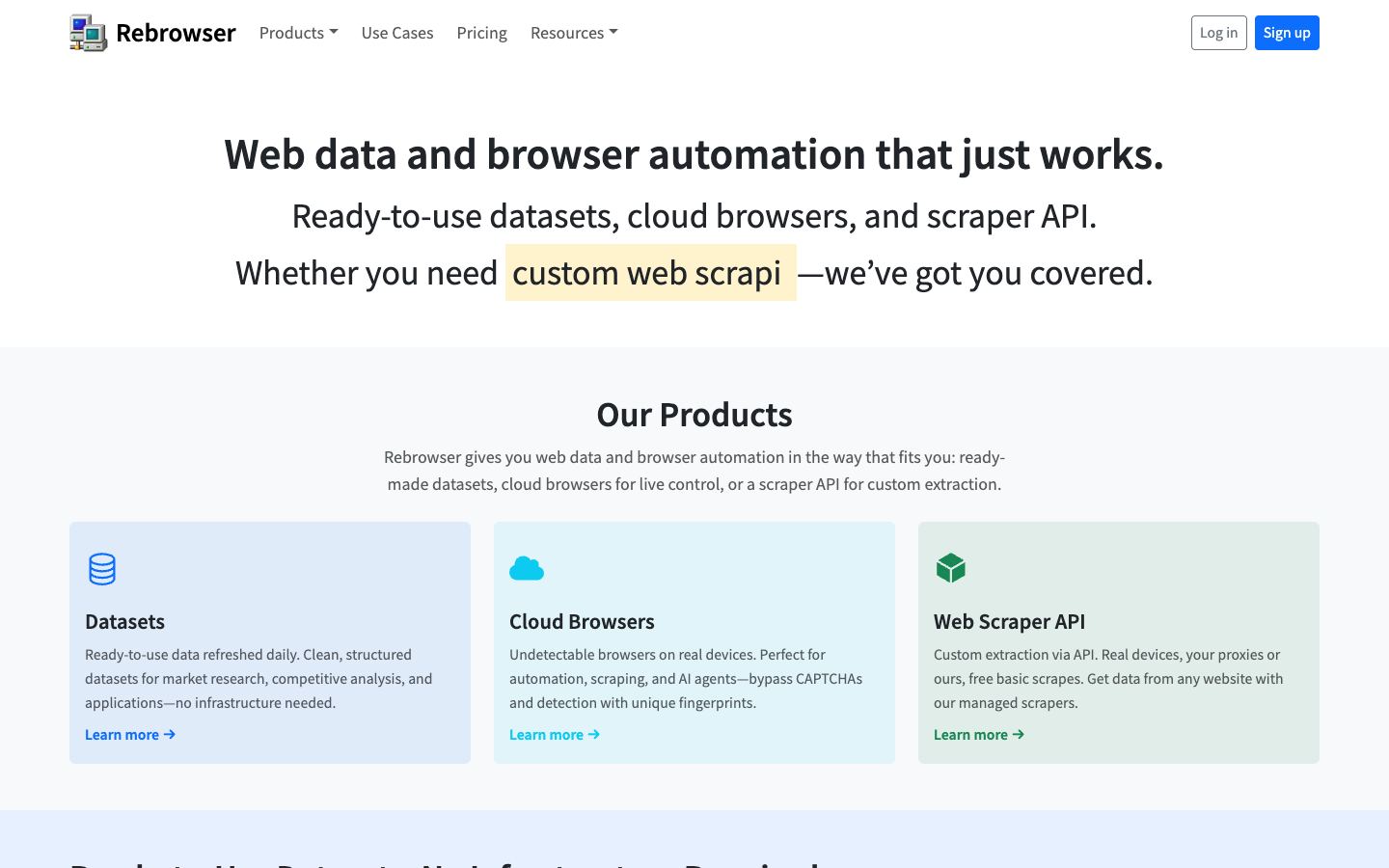
Web automation and data platform built on undetectable browsing – patches Chromium to evade bot detection at the browser level, offered as managed cloud browsers plus open patched-automation tooling.
Our verdict
Takes anti-detection to the browser engine level rather than just header spoofing. Chromium patches make automation genuinely harder to detect than standard Playwright or Puppeteer setups.
Niche tool for a specific problem – if target sites don't use advanced bot detection, you're paying for capabilities you don't need. The anti-detect focus also raises ethical questions.
Categories:
Cloud browser infrastructure provides managed Chromium instances that AI agents can control remotely. These platforms handle the complexity of browser lifecycle management, anti-detection, session persistence, and scaling. They are used by AI agents that need to interact with authenticated websites, fill forms, or navigate complex multi-step web workflows.
Cloud browser infrastructure for agents, with the Stagehand SDK
Freemium·Mar 2026·Browser Infrastructure
Open-source browser API with stealth and session management
Freemium·Mar 2026·Browser Infrastructure
Anti-detect browser with fingerprint control and a headless API
Freemium·Mar 2026·Browser Infrastructure
How Rebrowser compares
Steel.devSteel.dev offers stealth capabilities in a broader AI-agent platform rather than a standalone anti-detect browser.
NstbrowserNstbrowser provides similar anti-detect features with fingerprint management and multi-account support.
BrowserbaseBrowserbase is the mainstream choice when you don't need deep anti-detection capabilities.
Frequently asked questions
How much does Rebrowser cost?
Rebrowser uses a freemium model, with a free tier to start and paid plans tiered by usage. There is no free self-hosted option, since the managed service runs only on Rebrowser infrastructure. On most cloud browser services you also pay for usage such as browser hours and data traffic on top of the base plan. Check the Rebrowser pricing page for current tier names and rates, as published numbers change and depend on your session volume.
Is Rebrowser open source?
No. The hosted anti-detect browser platform is a closed commercial product and cannot be self-hosted. Rebrowser does publish some open tooling separately, including patched browser automation forks and bot-detection test code, which you can run on your own. That tooling is distinct from the managed service you pay for, which runs only on Rebrowser servers.
What makes Rebrowser different from running plain Playwright or Puppeteer?
Rebrowser patches Chromium at the engine level to remove signals that bot-detection systems use to flag automation, such as Chrome DevTools Protocol leaks. Standard Playwright or Puppeteer setups expose those signals, so sites with advanced detection block them more easily. Rebrowser runs real browser sessions in the cloud and renders JavaScript like a full browser. The tradeoff is added cost for a narrow use case.
When should I choose Rebrowser over Browserbase?
Choose Rebrowser when your target sites use aggressive bot detection and your automation keeps getting blocked despite stealth plugins, since its value is engine-level evasion. Browserbase is a more general cloud browser for agents and automation without that anti-detect specialization. If your targets do not run advanced detection, Browserbase or a plain headless setup usually does the job for less money.
Who is Rebrowser best for?
It suits teams whose automation hits hard anti-bot walls on specific high-value targets and who have already tried lighter options. If the sites you scrape do not deploy advanced detection, you are paying for evasion you do not need, and a general cloud browser like Steel.dev or Nstbrowser fits better. The anti-detect focus also raises ethical and terms-of-service questions worth weighing first.