What does parse.bot do?
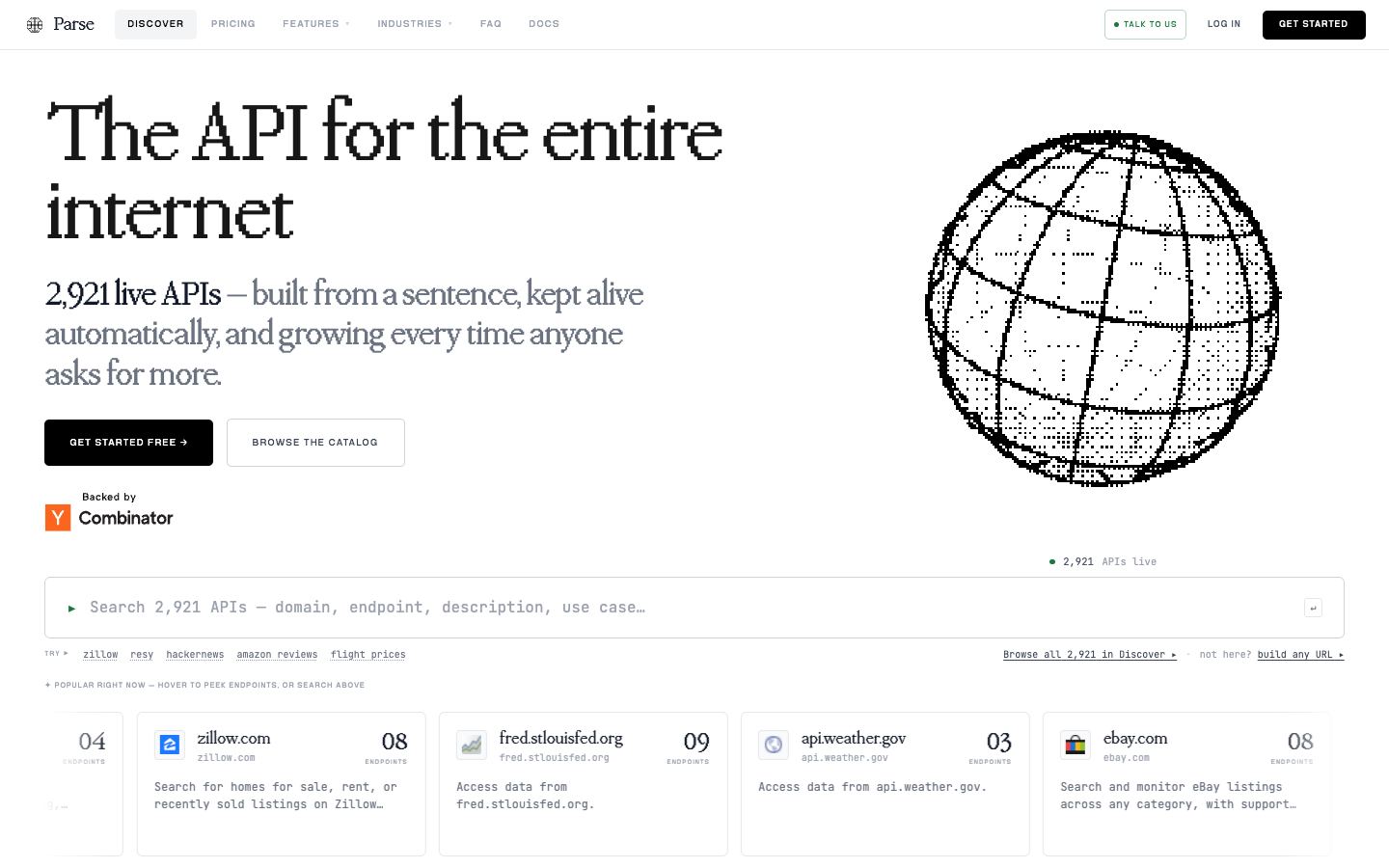
parse.bot turns any website into a structured REST API endpoint. You give it a URL, describe the data you need in plain English, and it returns a live typed endpoint that responds with clean JSON. It also handles actions such as logging in and submitting forms, so it covers multi-step flows rather than reads alone. It sits in the agentic extraction category and targets builders who want an API in minutes instead of maintaining scraper code.
How much does parse.bot cost?
parse.bot uses a freemium model. There is a free marketplace of pre-built APIs for sites others have already mapped, plus paid usage for building your own endpoints. Pricing scales with usage rather than a flat seat fee. Per-page cost tends to run higher than bulk-oriented scrapers, so it fits targeted extraction better than large crawls. Check parse.bot/pricing for current tier limits, since published numbers change often for an early-stage product.
Is parse.bot open source or self-hostable?
No. parse.bot is a hosted, closed-source service. Parse runs the endpoints for you and manages hosting, proxies, and anti-bot handling on its own infrastructure. There is no public repository to inspect and no self-hosted deployment option, so you cannot run it inside your own environment. If you need code you can audit or host yourself, parse.bot is not the right fit, and an open alternative like ScrapeGraphAI would serve better.
Does parse.bot render JavaScript and return structured data?
Structured data, yes. parse.bot returns typed JSON defined by the schema you describe, and manages proxies and anti-bot measures behind the scenes. Full client-side JavaScript rendering is not its model, though: it generates a reusable endpoint that fetches over HTTP rather than driving a headless browser, so pages that only assemble their content through client-side scripts are a weaker fit. The plain-English-to-endpoint approach works well on stable pages. The main caveat is durability. When a target site changes its structure, the generated endpoint can break, so it suits sites you control or that change slowly more than volatile high-value targets.
How does parse.bot compare to Diffbot?
Diffbot is a mature, well-resourced extraction platform with a knowledge graph and established enterprise support. parse.bot is much earlier, built by a roughly two-person YC-backed team, and its differentiator is the natural-language setup that produces an API in minutes. Choose Diffbot for scale, reliability, and support guarantees. Choose parse.bot when you want the fastest path from a single site to a working endpoint and can tolerate limited support and slower feature work.
When should I choose parse.bot over ScrapeGraphAI or Riveter?
Pick parse.bot when speed of setup matters most and you want a hosted endpoint without writing scraper code, especially for sites that need actions like form submission or login. Choose ScrapeGraphAI if you want lower per-page cost at volume or open-source code you can host. Riveter is also worth comparing for agentic extraction. Given parse.bot's small team and early stage, weigh its convenience against the support and stability a larger vendor offers.