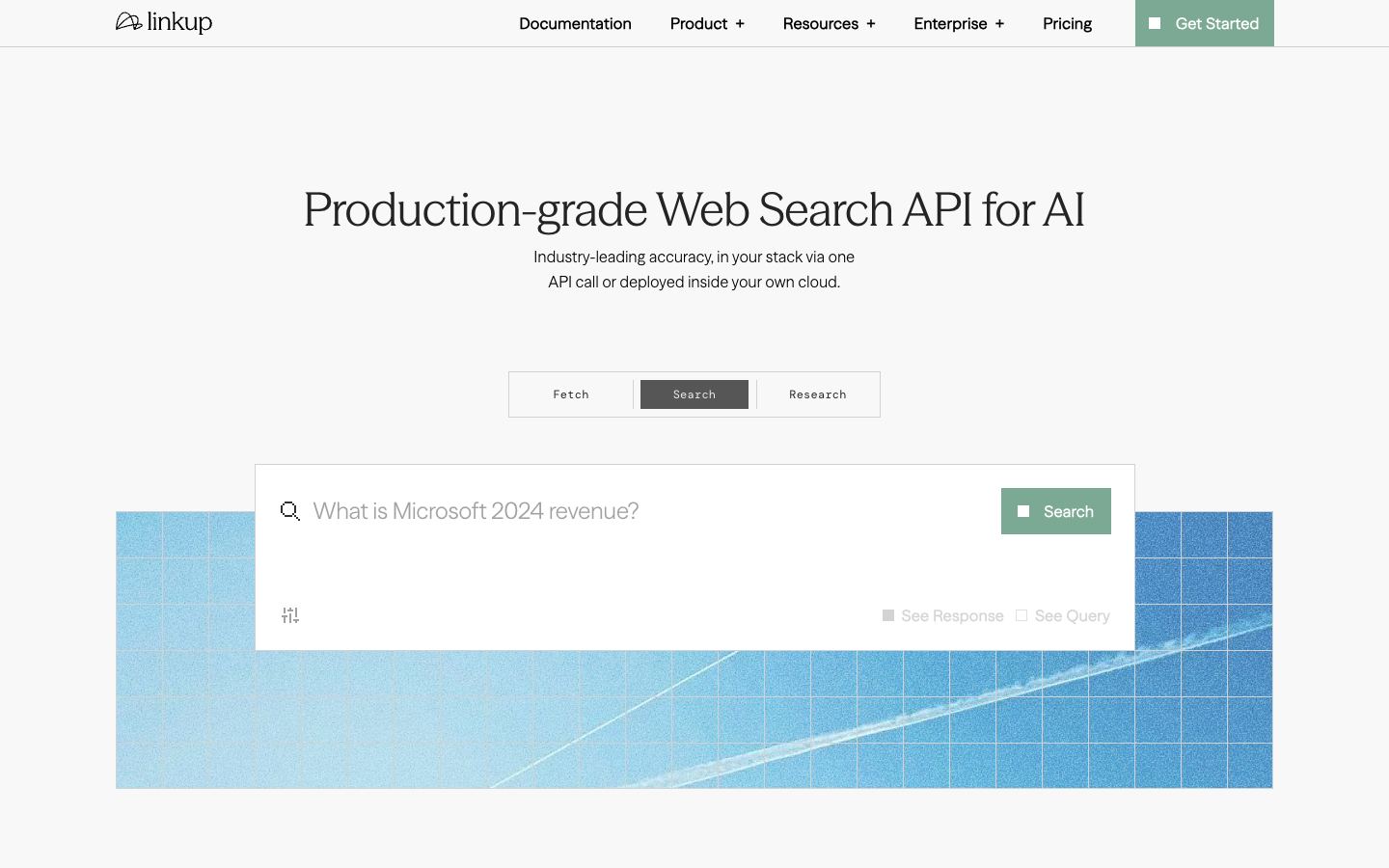
What is Linkup used for?
Linkup is a search API for AI agents and RAG pipelines, with the distinguishing feature that its index is built from licensed publisher content rather than scraped pages. Teams pick Linkup when data provenance matters – regulated industries, customer-facing AI products, or anyone wary of the legal exposure that comes with scraping-based APIs.
How does Linkup compare to Tavily?
Tavily ships broader LLM-framework integration (LangChain, LlamaIndex) and a larger pre-built community, while Linkup's distinct angle is its publisher-licensing model. Both now hold SOC2 Type II (Tavily also holds ISO 27001), so security posture is roughly at parity. Tavily's index is deeper today; Linkup's bet is that licensed retrieval becomes table stakes as AI search regulation tightens.
Is Linkup SOC2 certified?
Yes. Linkup is SOC2 Type II certified, which matters for AI products that ship into regulated industries like healthcare, finance, and legal. Direct competitors have since closed the gap: both Tavily (which also holds ISO 27001) and Exa now carry SOC2 Type II as well, so the credential is closer to table stakes than a standalone differentiator.
How does the 'information-atom' indexing work?
Linkup decomposes licensed source content into atomic claims (facts, statistics, quotes) and indexes those rather than full pages. At retrieval time, an LLM-friendly response is reassembled from atoms with citations back to source publishers. This reduces hallucination surface for downstream agents but limits Linkup to content publishers have licensed, so the index is shallower than scraping-based alternatives.